Last updated: November 18, 2026 · By Wander Cambodia
 By Sophea Khim · Host & Editor, Wander Cambodia
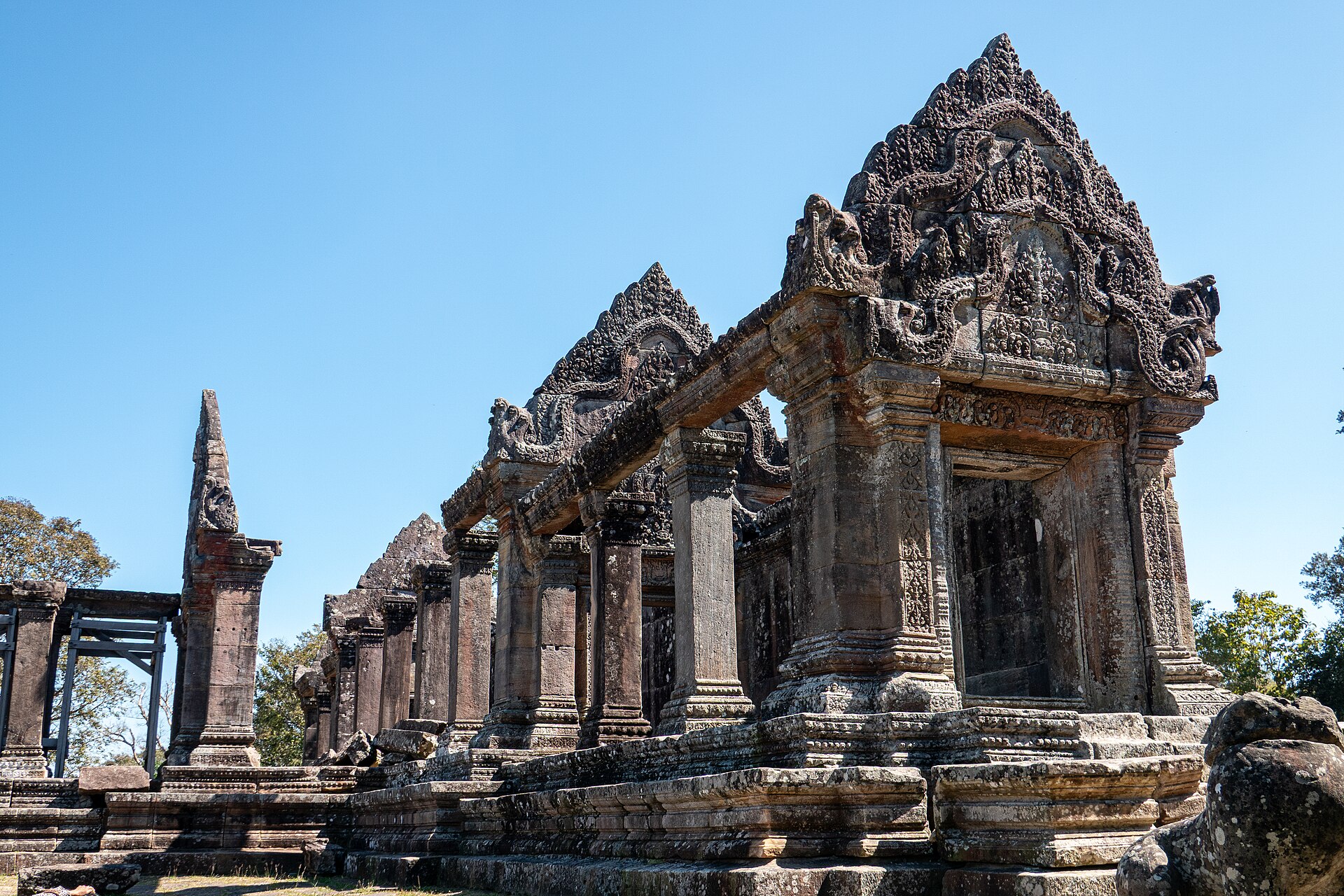
Every great Khmer temple is a model of Mount Meru, the home of the gods. Preah Vihear is the one that did not have to pretend. It stands on a real mountain edge — a promontory of the Dangrek range in Cambodia's far north, 525 metres up, where the plateau ends in a cliff and the land falls away to the plain below. The temple, dedicated to Shiva and built mainly in the 11th and 12th centuries under kings including Suryavarman I and Suryavarman II, is laid out not in concentric squares like Angkor Wat but as a single 800-metre line: causeway, stairs and five gopuras climbing the ridge to the sanctuary at the cliff edge. UNESCO listed it in 2008. Nothing else in Cambodia looks or feels like it.
Preah Vihear's drama and its difficulty are the same fact: the cliff it stands on is the border with Thailand. Cambodia's land borders with Thailand have been closed since June 2025, and this temple has been a sensitive spot in the two countries' long-running boundary dispute for decades. The practical rules are simple. You visit from the Cambodian side only, up the access road from Sra Em. You do not approach from Thailand, and there is no cross-border visit to combine it with. And because border-area conditions can change, check the current position before you travel — our Thailand–Cambodia border status page tracks it, and the word of officials in Sra Em on the day outranks any guide, this one included. If the area is quiet, as it is for long stretches, the visit is straightforward. Just do not plan it blind.
The misconception is that Preah Vihear is one temple building. It is a procession. From the foot of the sanctuary hill, a long paved causeway and a monumental staircase — over 160 steps on the steepest flight — lead up through a sequence of gopuras, the carved entrance pavilions that mark each stage of the ascent. Each one is a small temple in itself, with pediments carved with Hindu scenes, and each frames the next stretch of the climb. The builders arranged it so the main sanctuary stays hidden until the final approach: you earn the reveal one gate at a time.
At the top, the central sanctuary stands at the very edge of the escarpment. Walk to the cliff edge behind it and the point of the whole site lands at once: the land drops away hundreds of metres and the northern Cambodian plain runs to the horizon. On a clear dry-season morning this is the finest temple view in the country — better than any single tower at Angkor, because the landscape does half the work. Go early. By midday the haze eats the view and the exposed ridge gets properly hot.
The standard base is Siem Reap, roughly 3.5 to 4 hours away by road via Sra Em — our Siem Reap to Phnom Penh guide covers the southern road; for Preah Vihear you head north instead, and almost everyone hires a car and driver for the day or joins a small-group tour, because public transport does not run to the temple itself. At the ticket checkpoint below the mountain you buy the site ticket (separate from the Angkor Pass), then transfer to a local pickup truck or motorbike taxi for the steep, winding final climb — private cars generally do not go up the last stretch. Carry small cash for the ticket and the transfer (see money in Cambodia) and confirm current fees at the checkpoint.
Allow two to three hours on the mountain itself. The site is a line, not a maze: up the causeway, through the gopuras, time at the cliff edge, and back down the same way. Pairing it with Koh Ker, the pyramid-temple capital that sits roughly on the route, makes the classic northern loop — a long day, or a better two days with a night in Sra Em or Preah Vihear town. Travellers breaking the Phnom Penh–Siem Reap road instead can approach from Kampong Thom, though Siem Reap remains the easier base.
There is little shade on the ridge and no real food at the top — carry water, a hat and sunscreen, and eat in Sra Em. The dry months, roughly November to February, give the clearest cliff views; in the wet season the plain below turns a spectacular green but cloud can close the view entirely. Dress as you would for any active Cambodian temple: shoulders and knees covered. And keep the border rule in mind on site: stay on the marked paths and the temple plateau, follow any instruction from site staff, and do not wander off toward the escarpment edges beyond the sanctuary. The point of Preah Vihear is that it asks a little more of you than Angkor does — a longer drive, a steeper climb, a check on the news before you go. What it gives back is the one temple in Cambodia that still feels like a pilgrimage.
Yes, if you have a spare day beyond Angkor and want the single most dramatic temple setting in Cambodia. The temple runs 800 metres along a cliff-top ridge in the Dangrek Mountains, ending at an escarpment edge with a view over the northern plain. It is a full day from Siem Reap, not a quick add-on.
By road, via Sra Em, the town below the mountain — roughly 3.5 to 4 hours each way by car or minivan. Most visitors hire a car and driver for the day or join a small-group tour. At the ticket area below the hill you transfer to a local pickup or motorbike taxi for the steep final climb to the temple.
Read this before planning: the temple stands on the Cambodia–Thailand border, and Cambodia's land borders with Thailand have been closed since June 2025. Visits are from the Cambodian side only. Border-area conditions can change, so check current official travel advice and the situation on the ground in Sra Em before you set out, and do not go if local officials advise against it.
No. Preah Vihear has its own entry ticket, sold at the checkpoint below the mountain — it is not covered by the Angkor Pass. Carry small cash and confirm the current fee at the gate rather than trusting any printed figure.
Yes — that is the classic northern loop. Koh Ker sits roughly halfway between Siem Reap and Preah Vihear, so a long day with an early start can cover Koh Ker in the morning and Preah Vihear in the afternoon. It is a lot of driving; splitting them over two days is the calmer version. See our Koh Ker guide.
One short email a week with what actually changed on the ground — no fluff, no spam.
Free forever · One email a week · Unsubscribe anytime
Visa rule changes, the best travel deals we find, and new guides — once a week, no spam.
Free forever · Unsubscribe anytime
 Wander Cambodia