Last updated: November 15, 2026 · By Wander Cambodia
 By Sophea Khim · Host & Editor, Wander Cambodia
Kampot pepper is not a brand — it is a place, protected by law. Pepper grown in Kampot and Kep provinces, to a strict specification, is the only pepper in the world allowed to carry the name, and chefs have rated it among the finest peppers anywhere since the colonial era. The farms around Kampot are now one of the region's best half-day trips: vines climbing tall poles under the Elephant Mountains, hand-picked berries drying in the sun, and a tasting that recalibrates what you thought pepper was. This guide explains why the pepper is famous, how the farms actually work through the year, which ones to visit — the flagship La Plantation and the smaller family farms — and how to buy the real thing to take home.
The pepper's reputation rests on ground and paperwork in equal measure. The ground: farms sit on mineral-rich soil at the foot of the Elephant Mountains, close enough to the coast for sea air, in a pocket of Cambodia that gets both generous rain and a hard dry season — the combination the vines want. The paperwork: Kampot pepper became Cambodia's first geographical indication (GI) in 2010, and it is registered in the European Union too, so the name is protected the way Champagne's is. Before the Khmer Rouge era destroyed the industry, Kampot pepper was the pepper of French fine dining; production has rebuilt since the 2000s, farm by farm, and the revival is what you are visiting. None of that would matter if the taste did not deliver: Kampot pepper is known for a slow, building heat with floral, almost eucalyptus notes — tasting it fresh at the farm, ground over nothing at all, is the moment most visitors understand the fuss.
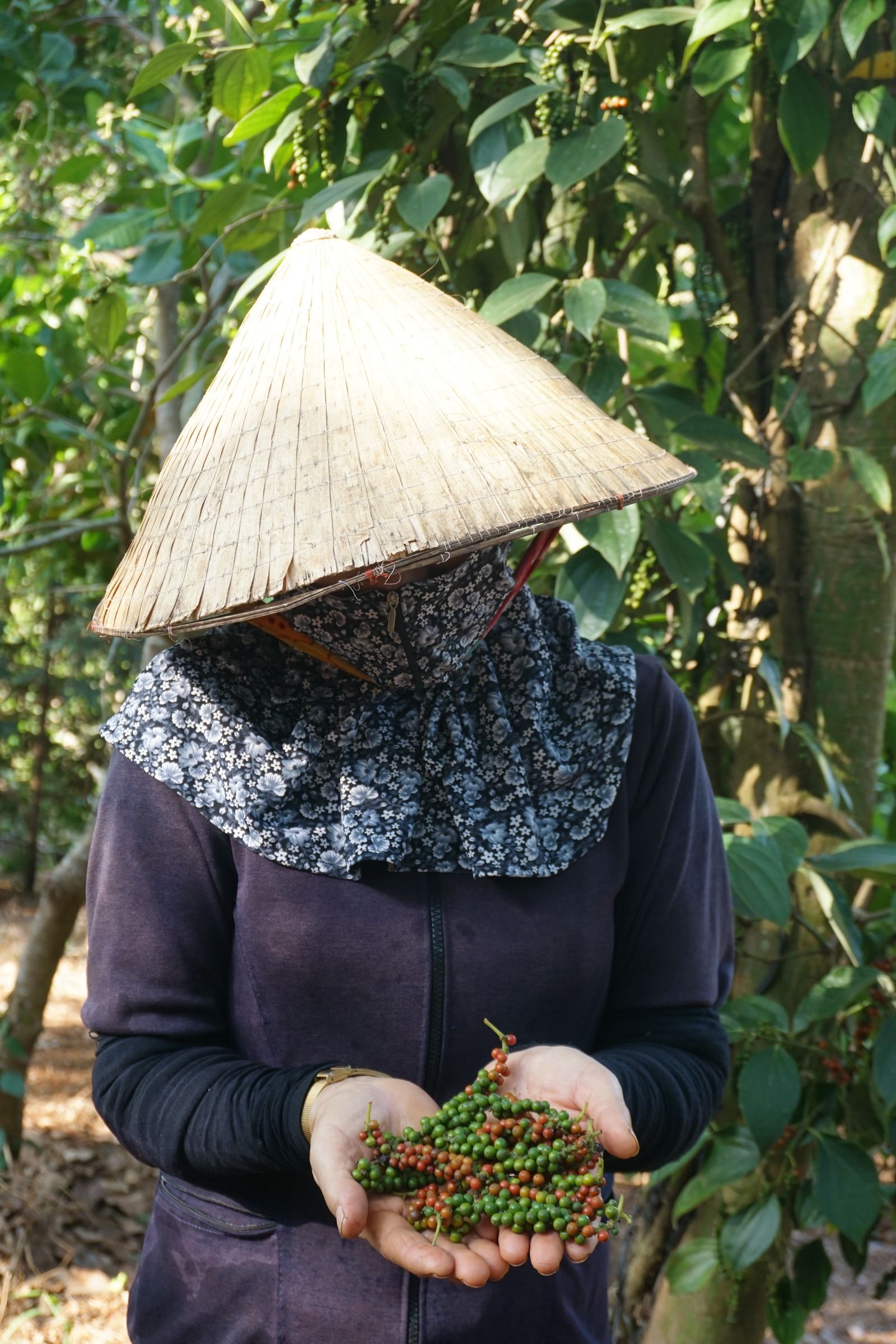
Everything at a farm shop starts as the same berry; the colour is a decision about when to pick and what to do next. Green pepper is the unripe berry, eaten fresh or sold preserved — it is the pepper pounded into sauces and served with Kep's famous crab at the source. Black pepper is picked as the berries ripen, briefly scalded, then sun-dried until the skin wrinkles and darkens: the all-round cooking pepper, with the strongest bite. Red pepper is the fully ripe berry, picked corn by corn at peak ripeness and dried with its colour and sugars intact — sweeter, fruitier, the connoisseur's finishing pepper. White pepper starts as red berries soaked in water so the outer skin can be removed, leaving the pale core — milder, earthier, the one for delicate sauces. A good farm tasting works through all four in order, and by the end the logic of the price differences explains itself.
Pepper is a climbing vine, and a Kampot plantation is a forest of tall poles — traditionally wood or brick — each carrying one plant several metres up. New vines take about three years to produce a real crop, and a plant gives for years after, which is why pepper farming is a long bet for the families who do it. The plants flower as the rains arrive, the berries swell through the wet season, and the harvest comes in the dry season, roughly February to April (some farms pick into May): pickers make several passes over every plant by hand, taking each bunch only when it reaches the ripeness its colour requires. Harvested berries are sorted, scalded where the recipe demands, and sun-dried for two to three days, turned regularly and brought in at night against the damp. The last step is the slowest: the dried crop is selected by hand, grain by grain, removing anything small, broken or stemmy. Almost nothing in that chain can be mechanised without losing what the GI protects — which is precisely the point.
The name most visitors know is La Plantation, a large organic farm and social enterprise in the countryside east of Kampot town, by the Bratek Krola lake — the 'Secret Lake' — also within easy reach of Kep. It is open every day of the year, 9am to 6pm, with the last farm visit at 4pm. The core experience is the guided farm tour and tasting: a walk through the pepper fields and spice and fruit gardens with a guide explaining the organic methods, followed by a guided tasting of the peppers and spices with cooking tips. The headline tour is free; around it sit paid extras — a restaurant, cooking classes (book at least a day ahead), private in-depth and sunset tours, and a well-stocked shop. One practical wrinkle: from November to March the farm asks you to book a visiting slot online in advance; in the low season you can simply turn up. Either way, allow time after the tour — the site is a place to linger, with views back over the fields to the mountains.
La Plantation is the biggest operation, not the only one. Sothy's Pepper Farm, a family-run organic farm on the road toward Kep, has been welcoming visitors for years with a free guided tour and tasting, a small restaurant, and the feel of a household that happens to grow world-class pepper. BoTree likewise runs free guided visits. Dozens of smaller family plots work the same vines a few rows at a time and sell at the farm gate or through Kampot town shops. The honest difference between the visits is scale and polish, not authenticity: choose La Plantation for the full, organised picture (and in harvest season, the surest view of processing at volume), and a family farm for a quieter, more personal hour. If pepper is a serious interest, do both — the contrast teaches you more than either alone.
The farms are a year-round trip, with two peaks of interest. In the harvest months (roughly February to April) you may see picking, drying racks in full sun and the sorting tables busy — the plantation as a workplace. In the rains, the vines are at their greenest and the countryside lush, but the red-dirt farm roads run muddy and a downpour can compress your visit; go in the morning. The standard combination, and the one we recommend, is a Kampot-based day: farm in the morning, then the Secret Lake it overlooks, the salt fields on the Kampot–Kep road (a dry-season spectacle of white pans and workers), and on into Kep for a late lunch of pepper crab at the crab market — the signature dish eating the signature spice where both come from — before the ride back. Our Phnom Penh to Kampot and Phnom Penh to Kep route guides cover reaching the region; the farm day itself starts once you are based in either town.
Kampot pepper is priced like what it is — a hand-made, appellation product — and imitations exist wherever it is sold casually. The rules are simple. Buy sealed: genuine product travels in sealed packets carrying the Kampot Pepper GI logo and certification mark; loose market pepper at a fraction of the farm price is not certified stock, whatever the stall says. Buy whole: peppercorns keep their character for a year or more in a sealed packet; pre-ground pepper fades in weeks. Buy the colours you'll use: black for everyday cooking, red for finishing and gifts — most visitors who taste both leave with red. And if the trip fires a wider appetite, our guide to eating in Cambodia puts pepper crab and the pepper-heavy classics in their full context.
Getting there: hire a tuk-tuk in Kampot for the round trip (agree the price and the waiting time first) or for a full farm–lake–salt-fields–Kep day; the farm roads are unpaved, and in the dry season they are dusty — a mask or scarf earns its place in your bag. Time needed: about an hour for a tour and tasting, plus the drive; a half day in total, a full day if Kep joins. Booking: in the November–March season, book La Plantation's visiting slot online ahead; cooking classes everywhere need advance booking. Children and mobility: the tours are gentle walking on farm ground; hats and water are on you. Finish the day the Kampot way — sunset on the riverfront, where the town's cafés face the water and the fishing boats come in.
Farm opening hours, tour arrangements and booking seasons checked November 2026 against the farms' own published visitor information; tour formats at working farms change with the season — confirm your exact visit, especially in the high-season slot-booking months.
Most visitors pair a farm visit with the mountain above Kampot — our Bokor National Park guide covers the hill station ruins, the old church and Popokvil waterfall on the same day trip.
At the best-known farms, yes — the standard guided farm tour and tasting at La Plantation is free, and smaller farms such as Sothy's and BoTree also run free guided visits and tastings. What costs money are the extras: cooking classes, private in-depth tours, meals and drinks, and of course the pepper itself in the farm shop. In the November–March high season, La Plantation asks visitors to book a time slot online in advance; from roughly April to October you can simply turn up.
In the dry season — roughly February to April (some farms pick into May), when the ripened bunches are harvested by hand over several passes so each bunch is taken at its best. The berries are then sun-dried for two to three days and sorted by hand, grain by grain. Visit in the harvest months to see picking and drying in action; in other months you see the vines, the processing and the tasting, with fewer berries on the plants.
Look for sealed packaging carrying the Kampot Pepper geographical-indication logo and certification mark. Only pepper grown in Kampot and Kep provinces to the GI specification can legally use the name — it has been protected in Cambodia since 2010 and is registered in the European Union as well. Pepper sold loose in markets at very low prices is almost never the certified article. Buying at the farm, or from a sealed, labelled packet, is the reliable route.
Allow a half day. The guided tour plus tasting runs about an hour at most farms; add the drive and time for the shop or a meal. La Plantation sits by the Bratek Krola lake (the 'Secret Lake'), roughly 30–45 minutes by tuk-tuk from Kampot town — hire the tuk-tuk for the round trip or a full day and combine the farm with the lake, the salt fields and Kep.
One short email a week with what actually changed on the ground — no fluff, no spam.
Free forever · One email a week · Unsubscribe anytime
Visa rule changes, the best travel deals we find, and new guides — once a week, no spam.
Free forever · Unsubscribe anytime
 Wander Cambodia