Last updated: November 19, 2026 · By Wander Cambodia
 By Sophea Khim · Host & Editor, Wander Cambodia
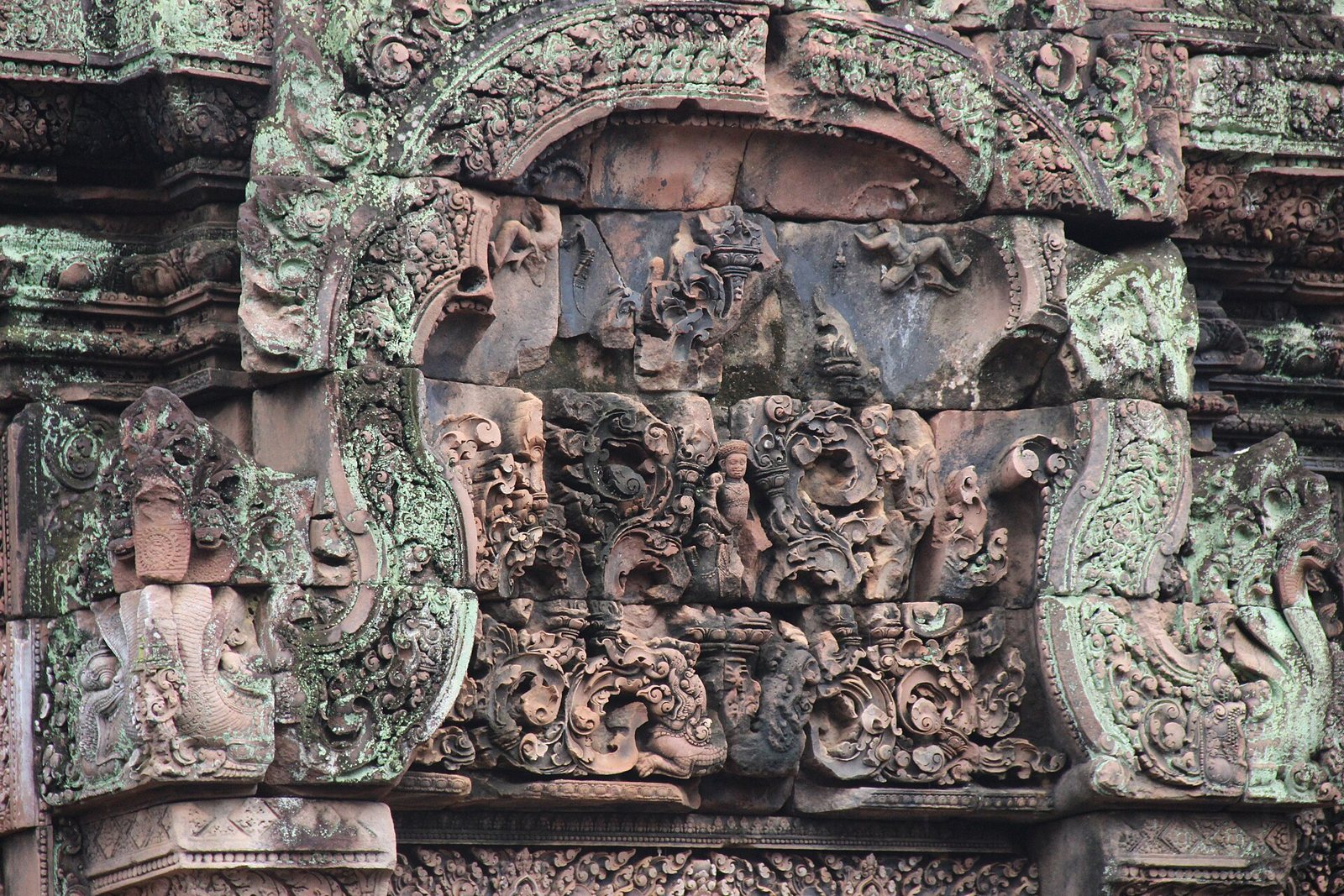
Angkor is a contest of scale — biggest temple, tallest tower, longest causeway. Banteay Srei wins a different contest. This small temple about 25km northeast of Angkor Wat is built from pink-red sandstone and carved more finely than anything else in the park: pediments layered three deep with gods and demons, lintels you could study for an hour, walls where the stone has been worked like wood. It is the one temple where the correct move is to slow down and look at surfaces a metre away, not skylines.
Banteay Srei breaks Angkor's rules in its paperwork as much as its stonework. It was not commissioned by a king. It was founded by Yajnavaraha, a Brahmin scholar who served as guru to two kings, Rajendravarman II and Jayavarman V, and consecrated in 967 — earlier than Angkor Wat by well over a century. It was dedicated to Shiva, under the name Tribhuvanamaheśvara. The name everyone uses now, Banteay Srei, means “Citadel of Women” and is modern; one popular explanation is that the carving was considered too fine to have been made by men, which tells you more about the storytellers than the sculptors.
The miniature scale was probably deliberate good manners as much as budget: a courtier's private temple could not decently rival a king's. What the builders did with the constraint was spend the money on density instead of size. The pink sandstone — harder than the grey stone of the big temples — holds a sharp edge for a thousand years, and the carvers knew it. Devatas stand in niches framed by spiralling foliage; the library pediments carry full scenes from the Hindu epics, including Indra sending down the rains and Shiva on Mount Kailasa. The site also has a famous modern chapter: in 1923 a young French writer named André Malraux was arrested for sawing devata figures off Banteay Srei's walls to sell — the scandal that pushed France to properly guard and restore the temples.
Banteay Srei is covered by the Angkor Pass — the standard pass you buy for Siem Reap and Angkor — which separates it from the own-ticket outliers like Beng Mealea and Koh Ker. The drive from Siem Reap takes about 45–60 minutes through villages and rice country, past the Landmine Museum, which is worth its own stop on the same road. At the site, a visitor centre and a marked route lead you in; the innermost shrines are roped off and viewed from low platforms, because a thousand-year-old carved wall and ten thousand hands a day do not mix. Do not touch the carvings — the oils in skin genuinely damage this stone.
Timing is the whole game here. The temple is small, the paths are narrow, and from mid-morning the tour buses arrive in sequence and the site fills. Go first thing: the low sun turns the pink stone almost rose-gold, the platforms are empty, and you can take the carvings at the pace they deserve. An hour is enough for most people, and the standard pairing is Banteay Samre, a quieter Angkor Wat-style temple on the road back, which most itineraries skip and which repays the stop. The point is the contrast Banteay Srei gives a day at Angkor — after temples built to overwhelm you, here is one built to be read up close.
Carving. This small 10th-century temple, about 25km northeast of Angkor Wat, is built of pink-red sandstone and covered in the finest, deepest relief work in all of Angkor — lintels, pediments and walls carved so densely the stone looks like woodwork or lace. It is routinely called the jewel of Khmer art.
Not a king. Banteay Srei was founded by Yajnavaraha, a Brahmin scholar and guru at the court of Rajendravarman II and Jayavarman V, and consecrated in 967. It was dedicated to Shiva. Its modern name, Banteay Srei, means “Citadel of Women”.
Yes. Unlike Beng Mealea and Koh Ker, which sell their own tickets, Banteay Srei is inside the Angkor Pass system — your standard 1, 3 or 7-day pass covers it. You pass a checkpoint on the road in, so keep the pass visible.
About an hour. The temple is small — almost miniature next to Angkor Wat — and the central shrines are viewed from roped platforms rather than entered. Most visitors combine it with Banteay Samre on the way back, or with the Landmine Museum on the same road.
Early morning. The pink sandstone glows in low light, and the tour groups that arrive mid-morning make the small site feel crowded fast. Aim to be there near opening, then work back toward the main temples as the day warms up.
One short email a week with what actually changed on the ground — no fluff, no spam.
Free forever · One email a week · Unsubscribe anytime
Visa rule changes, the best travel deals we find, and new guides — once a week, no spam.
Free forever · Unsubscribe anytime
 Wander Cambodia