Last updated: November 20, 2026 · By Wander Cambodia
 By Sophea Khim · Host & Editor, Wander Cambodia
Some routes need a comparison table and a warning section. Kampot to Kep is not one of them: 25km of paved coast road, 30 to 45 minutes, and a choice that comes down to how much freedom you want at the other end. This page gives you the four ways, what each typically costs, and the one decision that actually matters — whether Kep is your day trip or your bed for the night.
Tuk-tuk. The default. Roughly $8–12 one way at the time of writing, agreed before you set off — or booked through PassApp or Grab in Kampot, which fixes the price on screen and removes the negotiation entirely. The better deal for most people is the day hire, roughly $20–25: the driver takes you to Kep, waits or returns at an agreed time, and folds in the crab market, the beach and a villa loop without a second fare appearing. If a driver offers the day at a price far below that range, the difference usually reappears as stops at shops. A fair day rate, paid gladly, is the cheapest version of this trip.
Rented scooter. About $5–7 a day from Kampot's rental shops, and the hop becomes trivial: out when you like, back when you like, with the salt fields and the Secret Lake road as free detours on the way. The road is paved and flat. The rules are the standard southern-Cambodia set — helmet on, eyes open for livestock and dogs, no riding it after dark, and check that your insurance covers motorbikes before you need it to. Our Cambodia travel insurance guide explains the licence-and-helmet conditions that decide whether a claim gets paid.
Apps and cars. PassApp and Grab both operate in Kampot and will price a car as well as a tuk-tuk — worth it in the wet season or with luggage, roughly double the tuk-tuk fare. Shared minivans and buses run Kampot–Kep as part of longer southern routes; they are the cheapest seat on the road and the least useful for a day trip, because their timetable, not yours, sets the return.
The misconception is that you must choose a town. At 25km, Kampot and Kep function as one destination with two moods. Kampot has the riverside, the restaurants, the pepper farms behind it and the evening life. Kep has the crab, the quiet and the coast. Most visitors sleep in Kampot and day-trip Kep — our Kampot and Kep guide lays out both towns properly — and that is the right default for a stay of three nights or fewer.
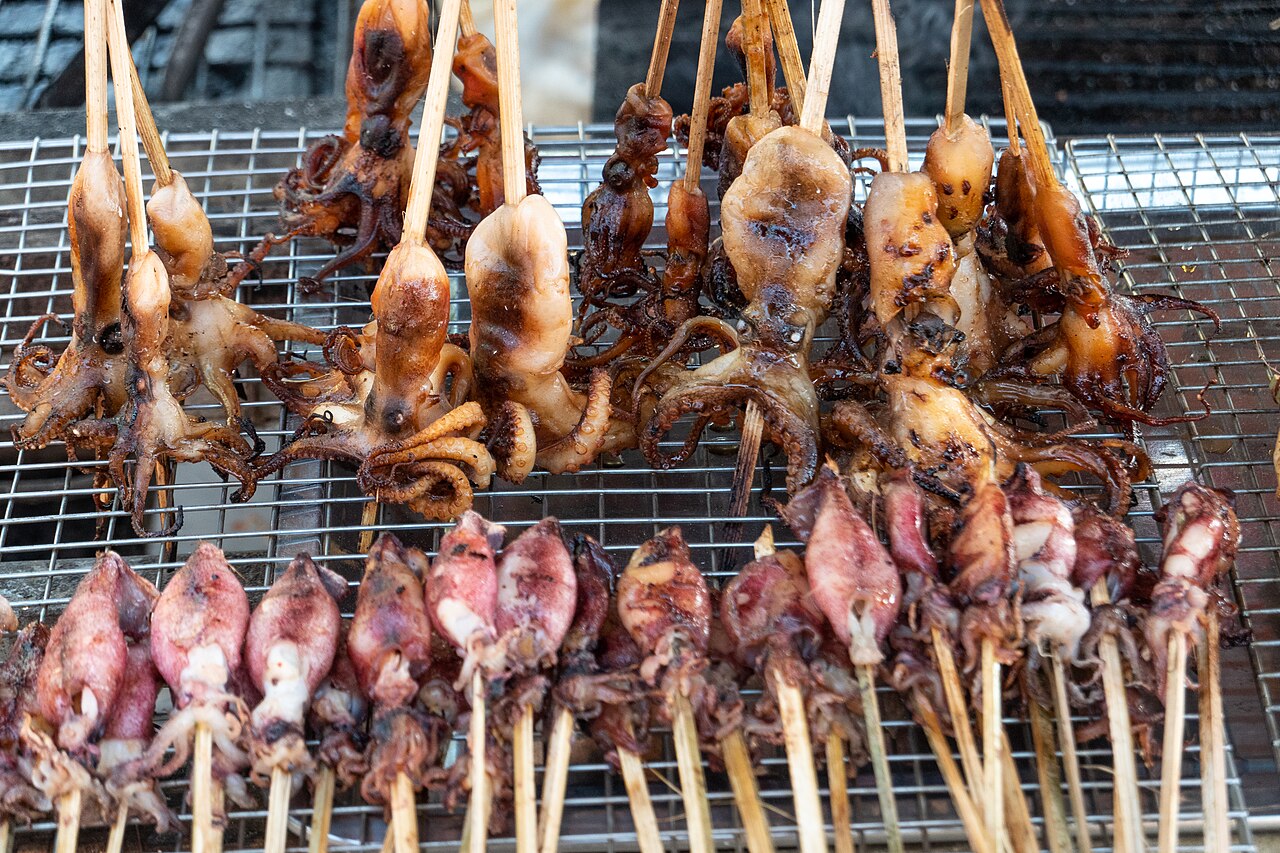
The case for sleeping in Kep is the morning. Once the day-trippers leave, Kep goes properly silent, and the crab market at breakfast time, with the boats in and the grills just lit, is a different place from the lunch rush our hero photograph catches — squid and octopus skewers charring over the coals. If your trip is long, your pace is slow, or you are routing onward, one night in Kep is well spent. Getting to the pair from the capital is covered by our Phnom Penh to Kampot and Phnom Penh to Kep route guides, including the train, which stops at both towns. The point of this little hop is that it should never be the hard part of the day. Pick the tuk-tuk day hire, eat the crab with Kampot pepper, and be back on the Kampot riverfront for sunset — or stay, and have Kep to yourself.
Riding onward along the coast afterwards? Our Kampot to Sihanoukville guide compares the bus, the train and a taxi for the 105km hop to the island ferries.
About 25km — 30 to 45 minutes on a paved road along the coast. It is one of the shortest inter-town hops in Cambodia, which is why most visitors treat Kampot and Kep as one base with two halves rather than two separate stops.
Four realistic ways. A tuk-tuk costs roughly $8–12 one way, or $20–25 to keep the driver for a full Kep day. The PassApp and Grab apps work in Kampot and price the ride before you commit. A rented scooter runs about $5–7 a day and makes the hop trivial. Shared minivans and buses also run the route, cheapest of all but slowest and least flexible.
Yes — that is how most people do it, and the distance is built for it. Leave mid-morning, eat crab at the crab market for lunch, swim or walk the shore in the afternoon, and ride back before dark. Staying overnight in Kep instead buys you the quiet: mornings there are slower than anywhere else on this coast.
The crab market and its seafood restaurants are the main event — Kep crab with Kampot pepper is the dish. Beyond that: Kep beach for a swim, the national park's hill trails behind the town, the crumbling French-era villas, and boat trips to Koh Tonsay (Rabbit Island) from the pier. It is a half-to-full day, honestly sized.
It is paved, flat and generally in decent condition — one of the easier self-rides in the south. The usual Cambodia rules apply: wear a helmet, expect livestock, dogs and unhurried local traffic, avoid riding it after dark, and make sure your travel insurance actually covers motorbike riding, because many policies quietly do not.
One short email a week with what actually changed on the ground — no fluff, no spam.
Free forever · One email a week · Unsubscribe anytime
Visa rule changes, the best travel deals we find, and new guides — once a week, no spam.
Free forever · Unsubscribe anytime
 Wander Cambodia