Last updated: November 13, 2026 · By Wander Cambodia
 By Sophea Khim · Host & Editor, Wander Cambodia
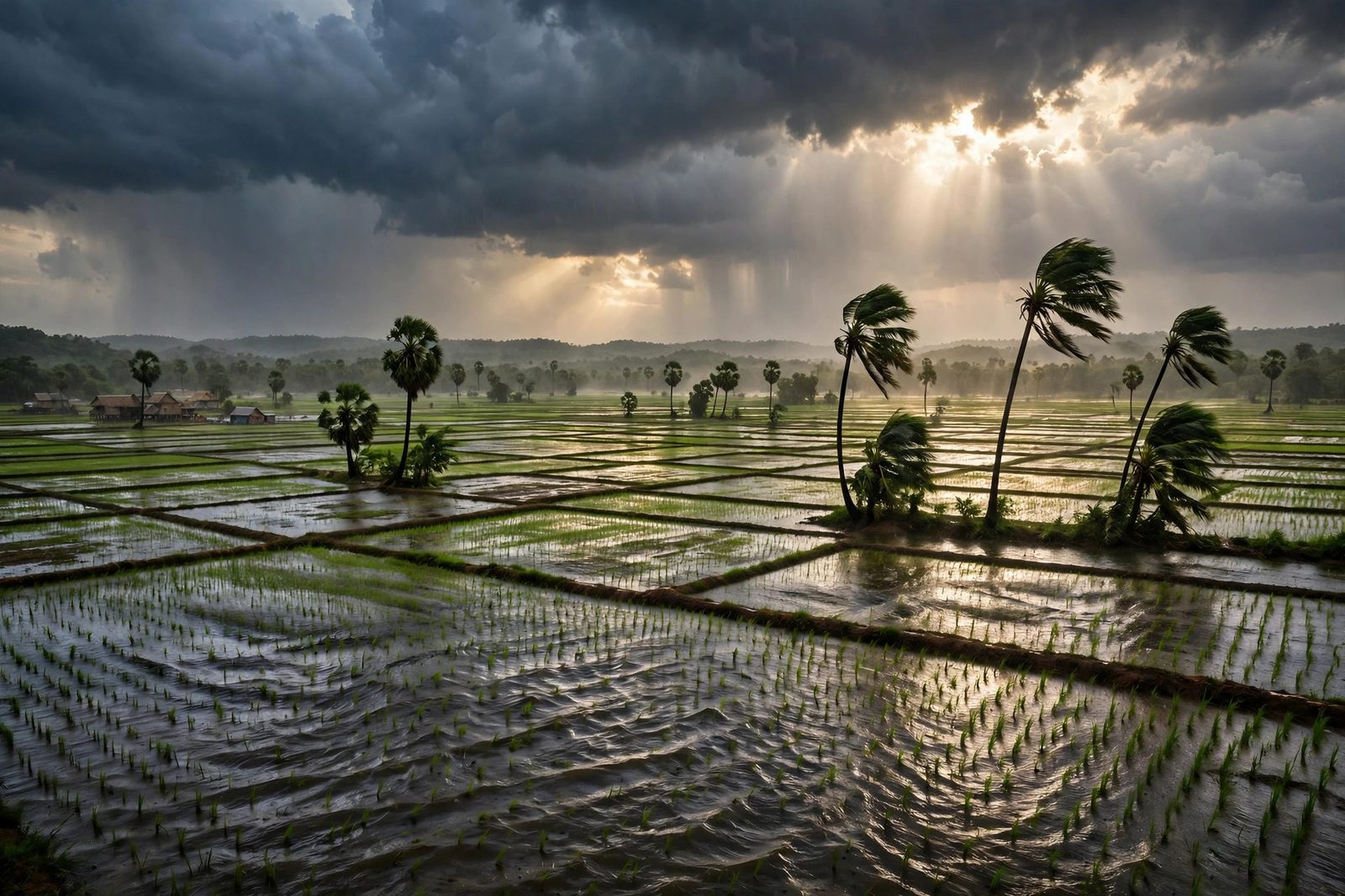
September is the rainy season at its peak — the wettest stretch of the Cambodian year alongside October, and the month the whole country turns fully green and full of water. Daytime highs sit around 31–32°C, rain falls on most days and often for longer than in August, the Tonle Sap approaches its annual maximum, and the Mekong runs at its highest. This is not a beach month and not a month for tight schedules. It is, for the right traveller, a beautiful one: empty temples, flooded forests, the strongest waterfalls of the year, and the lowest prices — if you plan around the rain instead of against it. It follows August in our month-by-month series; October, when the rain begins to ease and Pchum Ben arrives, is next.
Siem Reap and Angkor: a typical September brings roughly 220–250mm of rain — among the wettest months of the year. The moats are brim-full, the reflection pools perfect, the jungle steaming, and you may have major temples nearly to yourself between showers. Dawn starts remain the best window, but keep a covered reserve for days when rain sets in early. Phnom Penh: around 220–250mm too, with street flooding after the heaviest downpours a normal part of life; the capital's museums, markets and cafés are built for exactly this. Battambang and the northwest: still comparatively kind, though September narrows the gap. The northeast (Kratie, Mondulkiri, Ratanakiri): waterfalls at their absolute peak and hills at their greenest — Banlung and Kampong Cham reward the effort — but rural dirt roads are at their most difficult; add generous slack and take local advice on crossings after storms. The south coast and islands: the wettest corner by far, with rough seas and ferry cancellations common. Treat the islands as a weather-permitting extra only, never the foundation of a September trip.
Expect rain most days, sometimes in several heavy bursts, and accept that some days will be grey from morning. The working method is the rainy-season method at full strength: front-load sightseeing into the mornings, keep two indoor reserves per day, never schedule an unrepeatable highlight on your last morning, and build transfer days with hours of slack. After heavy rain, flooded street sections, swollen rivers and waterfall edges deserve real respect — local advice outranks any itinerary. The compensation is scale: the Tonle Sap's floating villages live their fullest wet-season life, the flooded forest is navigable, and the Mekong dolphins at Kampi, near Kratie, swim a wide, high river.
Run the inland loop slowly: Siem Reap on a flexible 3-day Angkor Pass, a Tonle Sap boat trip while the lake is near its greatest, then Battambang, then east through Kampong Cham to Kratie, finishing in Phnom Penh with early starts and long, covered lunches. That is our 14-day itinerary with the coast removed and the pace eased — or the 7-day version if time is short. Paperwork is unchanged: the $30 tourist eVisa (or the $35 Ordinary entry if you might stay longer) and the free e-Arrival card in the week before you fly. Our overview — when is the best time to visit Cambodia — puts September honestly in context: it is the connoisseur's end of the year, not the beginner's.
Prices stay at the year's floor: the lowest room rates, no booking lead times worth the name, and room to negotiate on tours and drivers. Spend the savings on resilience — a solid room with working drainage and air-conditioning, a driver booked by the day, and bookings you can move when a day of rain rewrites the plan. In September, flexibility is the most valuable thing money buys, and it is cheap.
A proper rain jacket that will work daily, a dry bag as everyday carry, footwear that survives soaking and dries overnight, and repellent used seriously — standing water means mosquitoes at their peak. The items that cost double bought in Cambodia are in buy before you fly, and the short version is our hard-to-buy packing answer.
Weather figures are long-term September averages checked November 2026 (inland roughly 220–250mm; the coast runs considerably higher). A single week's forecast always outranks a month's reputation.
September suits flexible, rain-ready travellers: it is one of the two wettest months, with the lushest green of the year, the Tonle Sap near its maximum, full waterfalls and empty temples, in exchange for rain on most days — sometimes for much of the day. Inland Cambodia works well with a loose schedule; the south coast and islands are at their wettest, with rough seas and cancelled ferries.
Sometimes, yes — September comes closest to all-day rain of any month. Heavy afternoon and evening downpours are still the most common pattern, but multi-hour rain and fully grey days are frequent. Front-load each day, keep two indoor reserves, and never put an unrepeatable highlight on your last morning.
Warm, humid and very wet: daytime highs around 31–32°C, nights in the mid-20s, and roughly 220–250mm of rain inland in a typical September — considerably more on the south coast. The Tonle Sap approaches its annual maximum and the Mekong runs at its highest.
Next in this series: Cambodia in October — the rains retreat, Pchum Ben, and the lake at its greatest.
One short email a week with what actually changed on the ground — no fluff, no spam.
Free forever · One email a week · Unsubscribe anytime
Visa rule changes, the best travel deals we find, and new guides — once a week, no spam.
Free forever · Unsubscribe anytime
 Wander Cambodia