Last updated: November 17, 2026 · By Wander Cambodia
 By Sophea Khim · Host & Editor, Wander Cambodia
Koh Kong is where Cambodia gets wet and green. The province fills the country's southwest corner, where the Cardamom Mountains — some of mainland Southeast Asia's last great rainforest — run down to the Gulf of Thailand. Travellers ignored it for years because the road was famously rough. The road is fine now. What has not changed is the character: a sleepy border town, big rivers, mangrove forest, and jungle that starts where the town ends.
Koh Kong town sits a few kilometres from Thailand, and a generation of guidebooks treats it as a border stop: cross at Cham Yeam, continue to Trat, done. That crossing is closed. Cambodia's land borders with Thailand have been closed since June 2025, and the Thai side of this province is not currently a route in or out for travellers. Come to Koh Kong from inside Cambodia, by Road 48, and leave the same way. Our Thailand–Cambodia border status page tracks the current position — check it rather than any printed guide, this one included, if your plans depend on a Thai crossing.
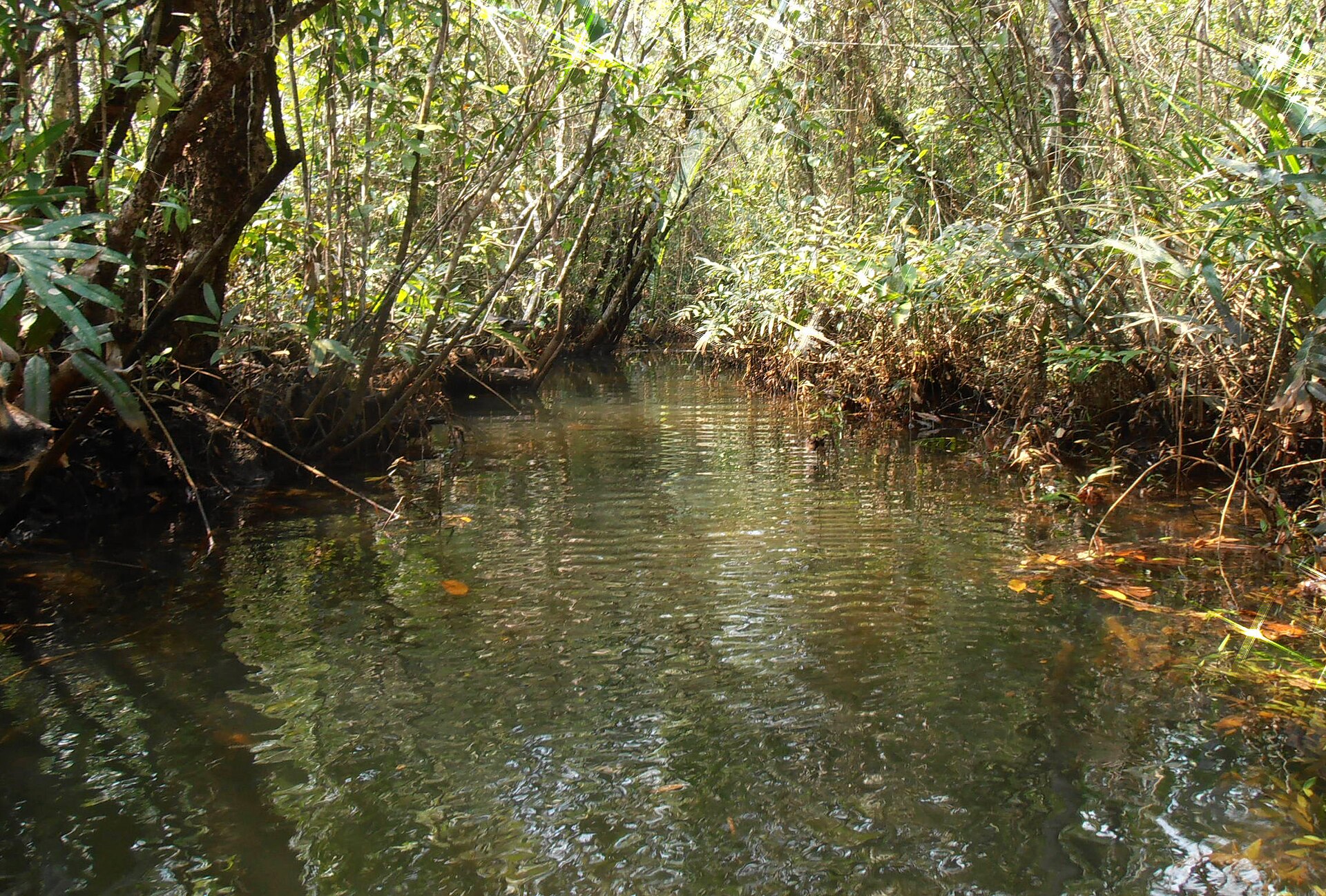
Twenty kilometres east of town, Road 48 crosses the Tatai River on its way inland, and this valley is where most visitors base themselves. The Tatai drains clean Cardamom forest, which is why its water runs so clear. Tatai Waterfall, a short boat ride or drive from the bridge, spreads across the river in two stages — a first drop of about 5 to 6 metres and a second of 12 to 15 — with pools between the rocks. In the wet season it is a genuine torrent and swimming is about picking the calm edges; in the dry months it settles into a wide, swimmable cascade.
The riverside lodges along the Tatai — reached by boat from the bridge — are the province's best addresses: kayaks at the jetty, fireflies at night, and the waterfall as the day trip. You do not need to stay at one to enjoy the river; boats from the bridge area run waterfall trips, and the turn-off to the falls is signed from the highway. Either way, build the Tatai into any Koh Kong stay — it is the single best half-day in the province.
On the other side of town, the Peam Krasaop Wildlife Sanctuary protects a big stand of mangrove forest at the edge of the Koh Kong estuary. A raised walkway and observation tower take you through and above the mangroves, past fishing villages whose stilt houses stand over the water. Go early or late in the day, when the light is low and the birds are active. It is a gentle visit — an hour or two, not a trek — and it explains the coast better than any beach here: this shoreline is mangrove and mudflat, not sand, and its calm green creeks are the attraction.
Serious nature time in Koh Kong means Chi Phat, the community-based ecotourism village upriver in the Cardamoms. The model is the point: families who once lived from logging and hunting now earn from guiding, homestays and the community restaurant, and the forest around the village is recovering in step. Treks run from half-day waterfall walks to multi-day jungle routes, with mountain biking and birdwatching alongside. Access is part of the experience — road, then river — so give it two nights minimum and book ahead through the community itself. If community-run forest tourism is your thing, pair this with Chambok at Kirirom, the same idea on the capital's side of the range.
Road 48 branches off Road 4 near Sre Ambel and crosses the foothills on a winding, scenic run into Koh Kong town — figure on roughly 5 to 6 hours from Phnom Penh by bus or minivan, and note the last stretch is hills, if motion sickness is your enemy. The town itself is small and walkable, strung along the estuary; the 1,900-metre Koh Kong Bridge at its edge was once the longest in the country, and crossing it has been free since 2017. Cash up before you come — banking thins out fast beyond town (see money in Cambodia) — and time your visit with the seasons in our best time to visit guide: Koh Kong is one of the wettest places in Cambodia, glorious and green in the rains, easier in the dry months. The point is simple. This province rewards travellers who slow down for rivers and forest. If that is you, it may be the part of Cambodia you talk about most.
Yes, if your trip has room for Cambodia's wild southwest. Koh Kong province pairs the Tatai River and its waterfall with the Peam Krasaop mangrove sanctuary, the community ecotourism village of Chi Phat in the Cardamoms, and a sleepy provincial town on the coast. It suits travellers who like rivers, forest and quiet more than sights-per-day.
By road on National Road 48, which branches off Road 4 near Sre Ambel and crosses the Cardamom foothills to Koh Kong town — buses and minivans run from Phnom Penh in roughly 5 to 6 hours depending on stops and road conditions. The province's famous bridge into town, at 1,900 metres once Cambodia's longest, has been free to cross since the state bought it in 2017.
No — not at the time of writing. Cambodia's land borders with Thailand, including the Cham Yeam crossing near Koh Kong town, have been closed since June 2025. Treat any older guide that describes hopping over to Trat in Thailand as out of date, and check our Thailand–Cambodia border status page for the current position before planning around any Thai crossing.
The Tatai is Koh Kong's headline river, flowing out of the Cardamoms about 20km east of town. Tatai Waterfall — a broad two-stage cascade, roughly 5–6 metres then 12–15 metres — is reached by boat from the Tatai bridge area or by road and a short walk. Riverside lodges along the Tatai run kayaking, boat trips and waterfall visits; the river is at its most dramatic in the wet season and calmest for swimming in the dry months.
Chi Phat is a community-based ecotourism village deep in the Cardamom Mountains, reached by a mix of road and river from the Road 48 corridor. The community runs trekking, mountain biking, birdwatching and homestays, with income going to former logging and hunting families who now protect the forest. It is one of Cambodia's genuine ecotourism success stories — book through the community, and give it at least two nights.
One short email a week with what actually changed on the ground — no fluff, no spam.
Free forever · One email a week · Unsubscribe anytime
Visa rule changes, the best travel deals we find, and new guides — once a week, no spam.
Free forever · Unsubscribe anytime
 Wander Cambodia